Office Clearance in Fulham

Our office clearance in Fulham is arranged for businesses that need work carried out with care, order and clear communication. We handle office furniture, workstation items, filing, loose equipment and general non-hazardous contents, with a practical approach that suits shared offices, private suites and premises being reworked or vacated. The aim is straightforward: keep the process controlled, reduce disruption and leave the space ready for whatever happens next.
We deal with clearances across a range of office settings, from compact professional rooms to larger commercial floors with multiple departments. In many cases the work is about more than removal alone; it involves separating items for reuse, recycling and disposal in a way that makes sense for the site. If you need a practical plan for desks, chairs, cabinets or mixed office contents, our team can shape the work around what is actually there rather than forcing it into a fixed package.
For a sensible next step, it helps to list the main items you want removed and note any access details such as stairs, lifts or loading points. That makes it easier to understand the job and prepare a quotation that reflects the real scope. If the clearance is time-sensitive, say so early so arrangements can be discussed clearly and in good order.
What our office clearance service covers
Office clearance work often includes a mixture of furniture, small fittings and day-to-day items that have built up over time. We can remove desks, office chairs, meeting tables, pedestal units, cupboards and shelving, along with items such as whiteboards, partitions and non-specialist equipment. Where appropriate, we separate reusable items from material that needs recycling or disposal, because not everything in an office has the same route out of the building.
The service can also suit businesses dealing with consolidation or reconfiguration. If you are reducing the number of rooms in use, changing layout or clearing an area before refurbishment, the work may need to be phased so certain items stay in place while others are removed. That is one reason detailed planning matters: it helps avoid unnecessary handling and keeps the right items available until they are no longer needed.
Furniture, fittings and everyday contents
The most visible part of a clearance is usually the furniture, but there are often many smaller pieces to deal with too. We can clear printers, monitors, cables, stationery stock, storage boxes and similar contents where they form part of the agreed work. Secure records and confidential material should be identified separately so the handling method can be discussed before anything is moved, especially if papers or digital media require extra care.
Planning a commercial clearance

A well-planned office clearance starts with understanding what stays, what goes and what access is available on the day. In business premises, that often means checking lifts, parking, reception arrangements, building rules and any preferred times for removal work. These details do not need to be complicated, but they do help shape a smoother process and a more accurate quotation. If several floors are involved, we can discuss the order of work so the clearance follows a sensible route.
Two practical steps are often enough to begin: prepare a brief item list and mention any access or timing limits that matter to the site. If you are clearing a shared office, let us know whether the items belong to one department or a wider fit-out. It is also useful to flag anything that should be handled with extra care, such as fragile furnishings, archived material or equipment that needs to remain undisturbed until a certain time.
How the work is normally arranged
Although every clearance is different, the work usually follows a clear pattern: items are identified, moved through the premises carefully and then sorted according to their destination. That may include reuse, recycling or disposal, depending on the condition and type of the material. For some businesses, the main benefit is simply being able to release an area in a controlled way rather than letting the workload spread across several staff members over many days.
Office furniture and equipment removal
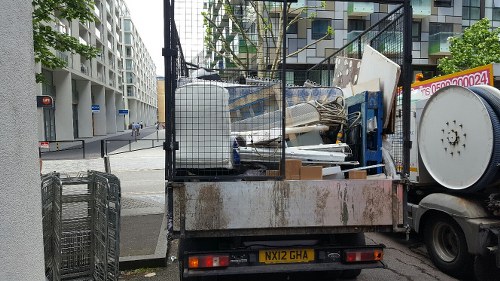
Many office clearances are driven by furniture changes rather than a complete shutdown. Desks, chairs and storage units may no longer suit the current layout, or they may need removing before new fittings arrive. We can remove broad office furnishings alongside smaller items that are part of the same clearance, helping to keep the job consistent from start to finish. The emphasis is on practical removal, sensible sorting and care around the building environment.
Where equipment is involved, the job can become more varied. Office clearances may include items such as desktop equipment, shelving systems, meeting-room items and ancillary fixtures that are no longer required. We do not assume that every item is ready for disposal; some may be better suited to reuse or separated handling. That approach is often more useful than treating everything as general waste, especially when the clearance includes a mixture of older and newer office contents.
For businesses comparing options, it is worth considering whether a clearance needs to be combined with partial reorganisation. If only one part of the office is changing, the best outcome may be to clear selected rooms while leaving the rest functional. A thoughtful service can support that kind of transition without creating extra disturbance. Careful item sorting also helps if there are pieces that need to be set aside for another location or for internal review.
Different office settings and access conditions
Office premises vary widely, and the way a clearance is carried out should reflect that. A small upper-floor studio, a suite within a managed building and a larger multi-room office all create different access needs. Narrow corridors, lift restrictions, loading bays and shared entrances can affect the order of work and the pace of removal. These factors are worth mentioning early so the clearance can be planned with fewer surprises.
Some jobs are straightforward and involve a single room or a handful of furniture items. Others need closer coordination because of building rules, tenant responsibilities or the presence of other occupants. In those situations, the service should stay organised and considerate. That can include working around opening hours, protecting common areas and ensuring that bulky items are removed without avoidable disturbance to neighbouring businesses.
The more information you can give about access, the easier it is to build a clear quotation. A short note about stairs, parking or restricted entry may prevent delays later on. It is also sensible to identify any items that are unusually heavy, fixed in place or awkward to move, as these may affect the approach even if the overall job remains fairly routine.
Sorting, reuse and disposal decisions

Office clearances are often more effective when the removal plan includes decisions about what happens to each category of item. Some furniture may still be serviceable, while other pieces are worn, broken or simply no longer needed. That is why sorting is such an important part of the process. It helps distinguish reusable items from materials that should be recycled or disposed of through the appropriate route.
For many businesses, the main question is not just how fast items can leave the building, but whether the clearance is handled in a sensible and orderly way. Desks, cabinets and chairs may all travel different routes once removed, and smaller office contents may need to be grouped separately. A service that understands those distinctions can support a tidier result and avoid unnecessary handling. This is particularly useful when the office contains a mixture of old and recent fittings.
Recycling and responsible disposal are often part of the conversation, but they should be treated as practical choices rather than vague promises. The real value lies in matching each item to the right outcome. If some pieces can be reused elsewhere or separated for recycling, that can be built into the plan. If not, they can be removed efficiently as part of the agreed clearance.
About Fulham
Fulham sits in the London Borough of Hammersmith and Fulham, on the north bank of the River Thames in west London. Its riverside position has shaped the area for centuries, with the river bend at Putney Bridge and the open stretch towards Chelsea forming part of its western and eastern edges. Historic growth in Fulham was linked to manor land, parish development and later urban expansion, and the district still shows that layered history in its street pattern and building stock. The area includes a mix of Victorian and Edwardian terraces, mansion blocks, local shopping streets and rebuilt sections that reflect twentieth-century change. Parsons Green provides a well-known open space and focal point, while Eel Brook Common gives another broad patch of greenery within the urban grain. The district is also notable for its sporting identity: Stamford Bridge lies close to Fulham’s boundary, and Craven Cottage stands as one of the area’s best-known landmarks on the river. Along the Thames Path, river views, embankments and moorings create a distinct edge to the neighbourhood, while the surrounding streets remain strongly residential and commercial in character. Fulham Broadway, North End Road and the routes around Wandsworth Bridge Road contribute to a busy local pattern of shops, services and everyday movement. Churches, schools and long-established parish boundaries add to the sense of continuity, and the overall character is one of a densely settled inner-London district with clear local identity, active streets and a blend of heritage and modern life.
Choosing the right clearance for your office move
Different office projects call for different levels of involvement. Some clients need a straightforward removal of surplus furniture, while others are preparing for a tenancy handover, refurbishment or full relocation. In either case, it helps to match the service to the shape of the job. A focused office clearance can deal with selected rooms, single floors or wider contents depending on what has to be cleared and what needs to remain in place.
The most useful choices are usually those that keep the process logical. If the office contains a mixture of items, it can be sensible to separate those that are staying from those that are leaving before the clearance begins. This is especially important where archives, IT items or shared equipment are involved. Good preparation reduces confusion, makes the work easier to sequence and supports a more accurate quotation based on the actual volume and access conditions.
When you are ready to take the next step, use a short enquiry to set out the main items, the address type and any time limits. That gives a clearer basis for planning and helps the service reflect the real requirements of the job. Contact us to discuss your office clearance needs and get the process moving.
Quotation details and practical job factors

Quotation requests for office clearances are usually clearer when they reflect the type of items, the amount of space involved and the access conditions at the premises. A small room of surplus chairs is very different from a multi-room clearance with cupboards, filing and mixed office furniture. That is why a good quote should be based on the real scope rather than on a generic description. It also helps to mention whether the work needs to happen before a handover, around staff hours or as part of a larger move.
Several factors can influence the job plan, including the number of floors, how close the loading point is to the office, whether there is lift access and whether any item needs special handling because of size or position. If you are unsure what to include, begin with the larger pieces and then add the smaller contents that belong to the same clearance. This keeps the discussion focused and avoids missing items that may affect the final arrangement.
If you would like to request a quotation, send through a clear summary of the office contents and the access setup. We can then discuss the work in a way that is practical, specific and suited to the premises. A simple note is often enough to begin the conversation, and it is the best route to a quotation that reflects the actual clearance required.
Office clearance for refurbishment and handover
One common reason for arranging office clearance is the need to prepare a space for refurbishment, contract works or end-of-lease handover. In these situations, timing and tidiness matter as much as removal itself. Furniture may need clearing room by room so contractors can begin, or the premises may need to be left in a defined state once the remaining contents have been taken away. The service should support that transition without adding avoidable complications.
When an office is being handed back, there may be a mixture of loose items, storage contents and fitted or semi-fitted furniture to deal with. The exact scope depends on the premises and what has been agreed internally, but the principle remains the same: remove the items that are no longer required and keep the process controlled. Where there are several areas to be tackled, a clear sequence helps prevent repeated handling and keeps the work manageable.
Businesses often find it easier when the clearance is treated as part of the wider project rather than as an isolated task. That means looking at the job in relation to the move, fit-out or building schedule. It also means allowing enough time for the right items to be identified before removal starts. A calm, organised approach is usually better than trying to deal with everything at the last minute.
Keeping the clearance orderly from start to finish
Order matters in office clearance because offices often contain mixed contents in shared spaces. One cabinet may hold papers, another may contain supplies, and a third may need to stay in place until the end of the day. For that reason, the work benefits from a measured approach rather than a rushed sweep through the premises. Clear identification of items, sensible sequencing and respectful handling all contribute to a better result.
Where needed, items can be grouped by room or by category before removal begins. That can help if different parts of the office are being cleared at different times, or if some contents need to be checked internally before they leave. Practical organisation also makes it easier to keep common areas usable while the clearance is underway. The service is most effective when it supports the building as a working environment, not just as a space to empty.
If your office clearance involves several categories of items, a brief written summary is often enough to move things forward. Mention what needs to go, what access is available and whether there are fixed dates to work around. Tell us what needs clearing, and we can help shape the job into a simple, workable plan.